
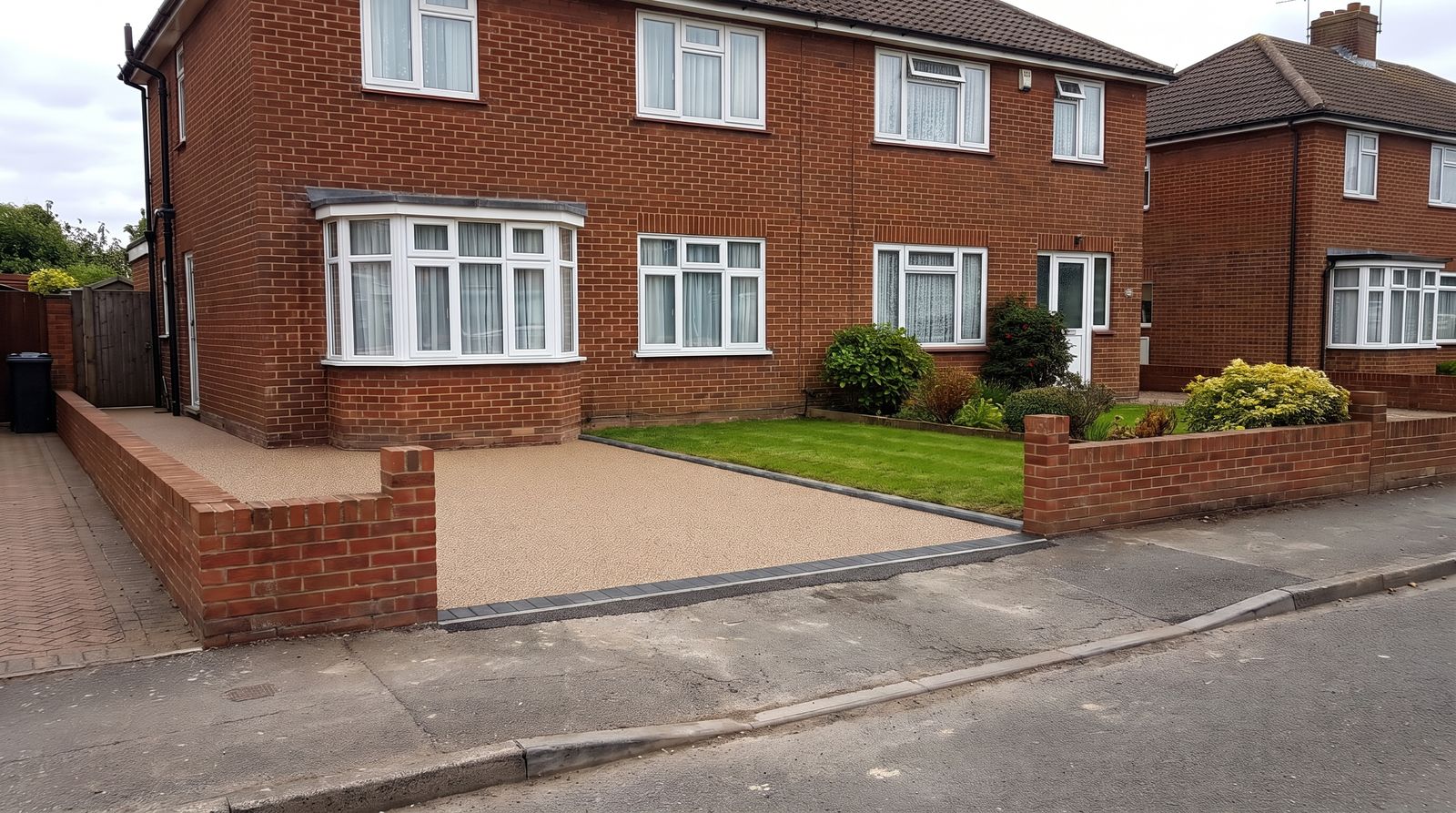
Resin bound driveways
Resin Driveways Norwich lays resin bound driveways for homes in Norwich and across Norfolk: natural stone mixed with clear resin and trowelled into a smooth, porous surface.
What resin bound driveways are
A resin bound driveway is made by mixing dried natural aggregate with a clear resin and spreading it by hand with a steel trowel. Every stone is coated, so once the resin cures the surface is smooth and even, with no loose gravel. Because there are small gaps between the stones, water can pass through the surface.
It suits homeowners who want a neat, low-maintenance finish that looks like gravel but behaves like a hard surface: easy to walk on, easy to push a pram or wheelchair over and simple to sweep. Whether water drains away depends on what is underneath, so a porous resin layer on a solid, sealed base will still shed water to the edges.
Resin bound is a surfacing layer, not a structural one. On a driveway it sits on a base that carries the weight of cars, either a new open-graded base laid for the job or an existing tarmac or concrete drive that is in good enough condition to overlay.
What is underneath
A resin bound driveway, layer by layer
The finish you see is the thinnest part of the job. What lasts is decided by the layers below it.
- 1
Resin bound layer
Dried stone mixed with resin and trowelled smooth. A porous finish that lets water pass through.
- 2
Porous base course
Open-graded or porous asphalt, so water that passes the surface keeps draining down. Standard tarmac does not let water through.
- 3
Sub-base
Compacted crushed stone that spreads the load of a car, deep enough for the ground it sits on.
- 4
Edging
A firm edge of metal, block or kerb that holds the surface in and gives it a clean line.
What is included
-
A site visit
We look at the area, measure it, check the existing surface and the levels, and talk through how you use the drive.
-
Base preparation
Either a new base suited to resin, or cleaning, repairing and priming a sound existing surface.
-
Edging
Edging to hold the resin at its borders, in a style that suits the house and the rest of the garden.
-
Your choice of stone
A natural aggregate blend chosen with you, with the option of a border or a second colour.
-
Mixing and laying
The resin and stone are mixed in measured batches and trowelled to an even depth and finish.
-
Anti-slip finish where needed
A fine grit can be scattered on slopes and steps for extra grip.
-
Clearing up
Spare materials and waste are taken away and the area is left tidy.
What to plan before you book
-
Drainage and planning rules
A new front driveway over 5 square metres needs planning permission in England unless it is permeable or drains to a lawn or border. A resin bound surface on a permeable base can meet that rule; on a sealed base you will need to think about where the water goes.
-
UV-stable resin
Some resins darken or yellow in sunlight over time. A UV-stable resin keeps light stone blends looking as they did on the day, which matters most for pale colours.
-
Access on the day
The drive will be out of use while it is laid and while the resin cures, so plan where cars will be parked and how you will reach the door.
-
Drop kerbs and the road edge
If the drive meets a public road, any new or widened dropped kerb is a matter for Norfolk County Council and needs their approval before the work.
Good to know
-
Depth and the base matter most
Most problems with resin driveways, such as cracks and loose stones, come from a base that moved or a layer laid too thin, not from the resin itself.
-
Weather affects the timetable
Resin needs a dry surface and the right temperature to cure. Rain or cold on the day can move the job.
-
Colour samples look different outside
Stone blends look different in daylight and when wet. Seeing a sample on your own drive is the best way to choose.
-
Looking after it is simple
A regular sweep and an occasional rinse with a hose or a low-pressure wash keeps the surface clean and the pores open.
Side by side
Resin bound or resin bonded?
They share a name and look alike in photos, but they are built differently and behave differently. This is the quick version.
| Feature | Resin bound | Resin bonded |
|---|---|---|
| How it is made | Stone mixed with resin, then trowelled flat | Resin spread on a base, loose stone scattered on top |
| Finish | Smooth and even, the stone locked in | Textured, like gravel stuck in place |
| Water | Porous: rain drains through when laid on a porous base | Not porous: rain runs off the surface |
| Underfoot | Firm and level, easy for buggies and wheelchairs | Grippy, with a rougher feel |
| Loose stones | None, once cured | A few at first while the excess settles and is swept off |
| Front garden planning rules | Can count as a permeable surface on a suitable base | Needs its water to drain to a lawn or border, or planning permission |
| Often used for | Driveways, front paths, patios | Driveways and paths where grip matters most |
Quick check
Do I need planning permission for a new front driveway?
In England, a new or replaced hard surface in a front garden is usually allowed without planning permission when the water is dealt with on your own land. Answer three questions for a rough guide.
This is a rough guide to the national rules for houses in England, not advice on your property. Flats, listed buildings, conservation areas and some new estates have their own rules, so check with your local planning authority before work starts.
From first message to finished drive
How the job runs
- 1
Your enquiry
Tell us about the driveway through the form: roughly how big, what is there now and where you are.
- 2
Site visit and measure
We visit, check the base and drainage, measure up and show you stone samples.
- 3
Written price
You get a written price setting out the base work, edging, stone and resin.
- 4
Preparation
We prepare the base and fit the edging, ready for laying.
- 5
Laying and curing
On a dry day we mix and trowel the resin, then leave it to cure before it is walked and driven on.
- 6
Handover
We talk you through looking after the surface and clear the site.
Questions people ask
Something else you want to know? Ask it with your enquiry and we'll answer it when we reply.
Is a resin bound driveway porous?
The resin bound layer itself is porous because there are small gaps between the coated stones. Whether water drains into the ground depends on the base beneath it, which is why we check the base first.
Can I drive on it straight away?
No. The resin needs time to cure first, and the time depends on the temperature and the product. We tell you when it is ready to walk on and when it is ready to drive on.
Will weeds grow through it?
Weeds do not grow up through a properly laid resin bound surface on a solid base. Seeds can settle on top in dirt and leaves, which a regular sweep deals with.
Does a resin driveway get slippery?
A resin bound surface has a natural texture from the stone. On slopes and steps a fine anti-slip grit can be added to the finish for extra grip.
Can it be laid over block paving or gravel?
Not over loose gravel, and not usually over block paving, because both can move. Resin needs a solid, stable base, so those surfaces are normally taken up first.
How do I choose a colour?
We bring samples of natural stone blends so you can see them against your house in daylight. Many people pick a main colour with a contrasting border.
Other resin work we do
-
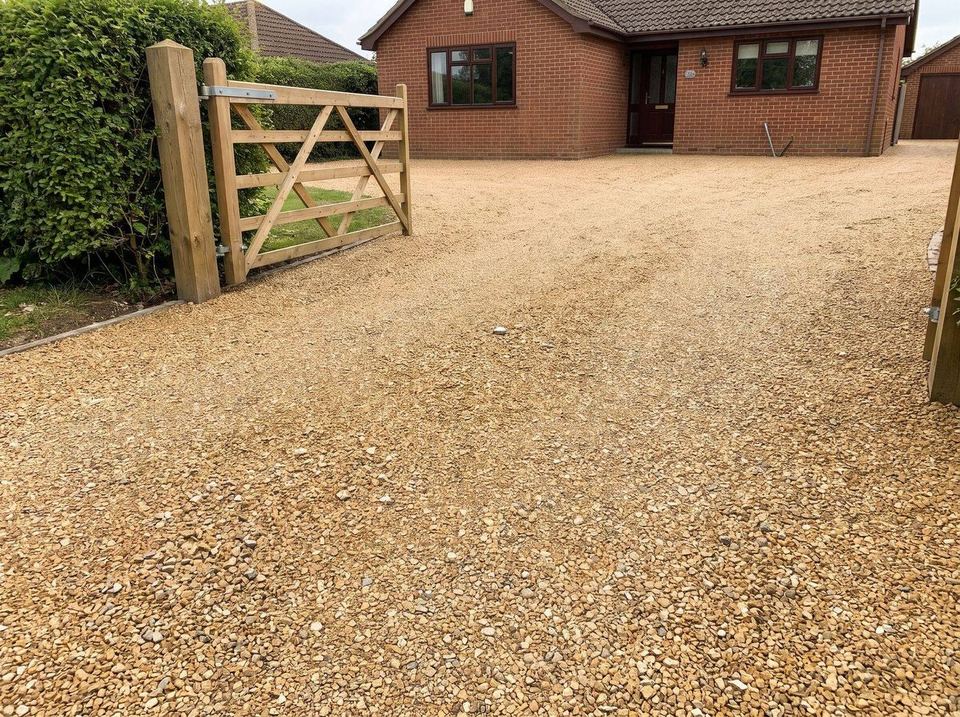 Resin bonded driveways Loose stone scattered onto a resin coat for a textured, grippy finish. Read more
-
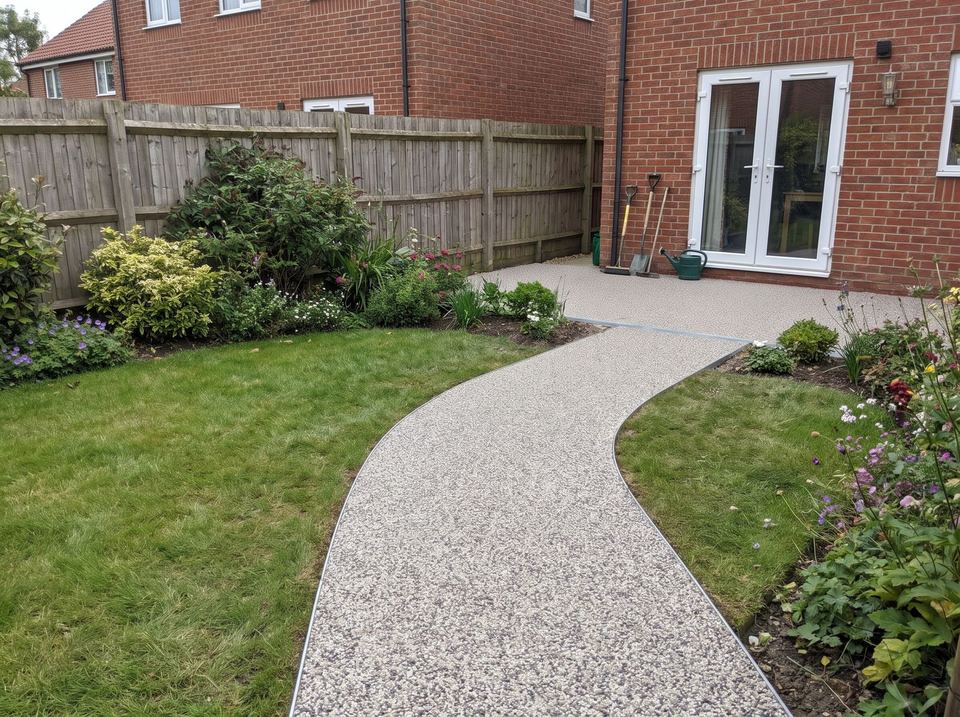 Resin patios and paths The same stone finish for garden paths, patios and the way to the door. Read more
-
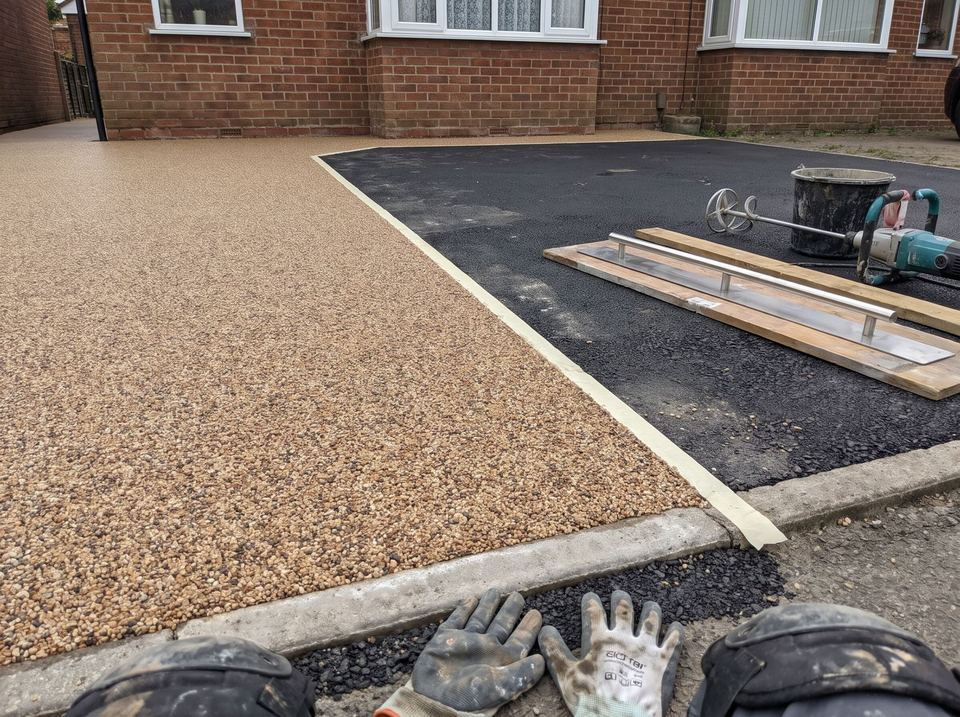 Resin over existing surfaces Resin laid over sound tarmac or concrete instead of digging it all out. Read more
-
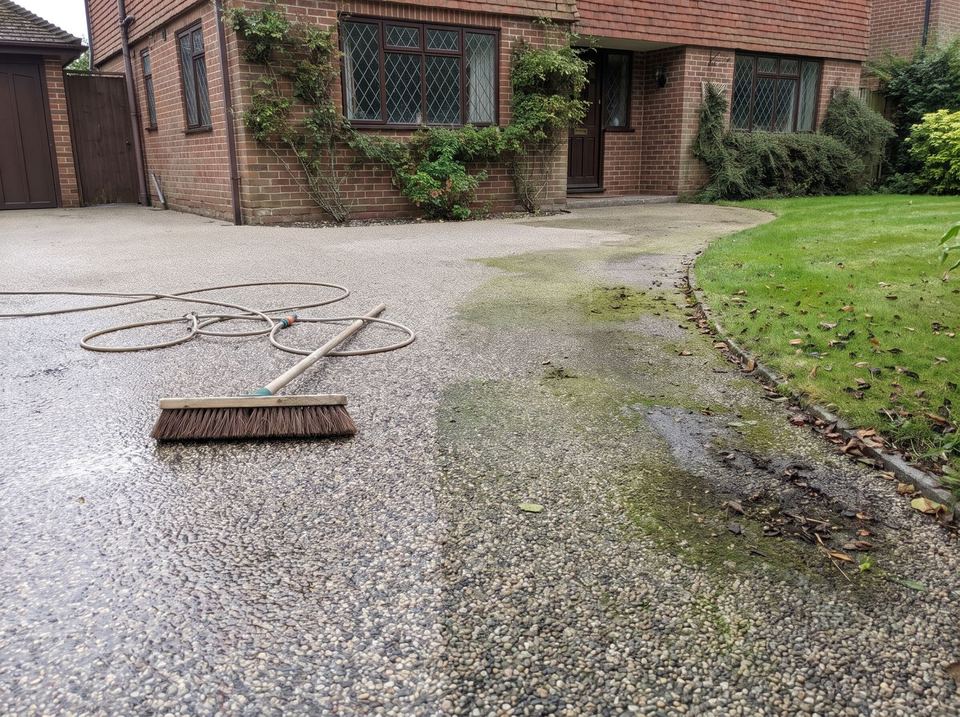 Resin driveway repairs and cleaning Cleaning, patching and putting right resin surfaces that have tired. Read more

Tell us about your surface
Send a few details and a photo if you have one, and we will come back to you to talk it through and give you a price.